Employee Welcome Kit Supplier in India for Bulk Corporate Orders

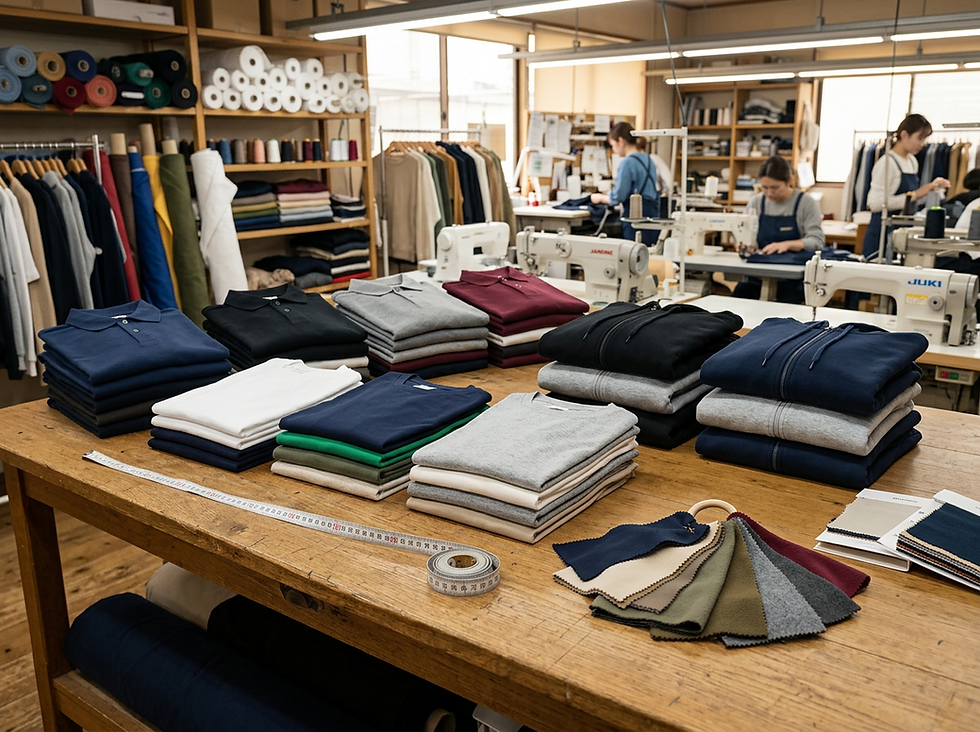
A welcome kit is often the first physical touchpoint an employee receives from a company. If it feels thoughtful, useful, and well made, it sets the right tone. If it looks rushed, has poor fabric, or arrives late, it creates avoidable friction for HR, procurement, and administration teams.
For bulk orders, the challenge is not just choosing products. It is choosing the right supplier, one who can manage apparel quality, logo customisation, sizing, packing, timelines, and delivery across India without constant follow-ups.
This guide explains how to choose an employee welcome kit supplier in India for bulk corporate orders, with branded apparel as the main focus and practical merchandise as optional additions.
What an employee welcome kit includes and why companies use it
An employee welcome kit is a curated set of company-branded items given to new hires, trainees, interns, remote employees, or teams joining a new office or project.
For companies, welcome kits help with three practical goals:
Create a consistent onboarding experience
Give employees useful items they can wear or use
Build visual identity through apparel and merchandise
The best kits are not overloaded. They usually combine branded apparel with a few everyday-use items.
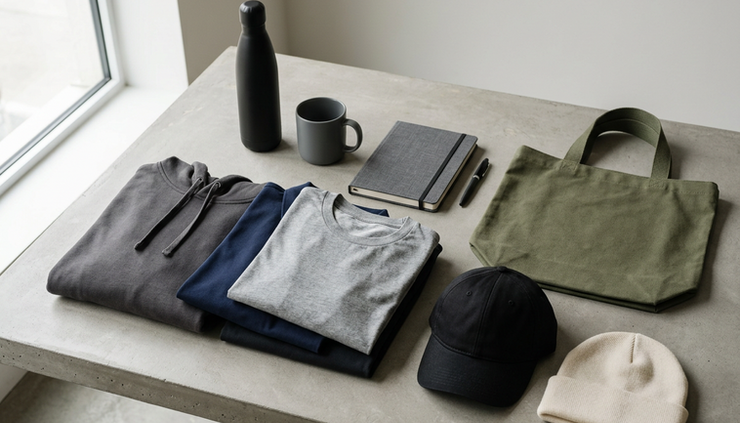
A simple welcome kit may include:
One company T-shirt
One cap
One notebook
One reusable bottle
One bag
A welcome card or joining note
A more premium kit may include:
Polo shirt or hoodie
Sweatshirt for colder locations or hybrid work
Embroidered cap
Notebook and pen set
Reusable bottle
Laptop sleeve, tote bag, or backpack
Custom packaging with employee-wise packing
For large teams, the most useful welcome kits are easy to wear, easy to distribute, and easy to replenish for future hiring batches.
Branded apparel should be the foundation of the kit
Apparel has the highest visibility in most employee kits. T-shirts, polos, hoodies, sweatshirts, and caps are practical, easy to customise, and suitable across departments.
Branded T-shirts work well for most teams
T-shirts are a common choice for startups, tech teams, operations teams, training programmes, events, and mass onboarding. They are cost-effective and simple to produce in bulk.
When selecting T-shirts, check:
Fabric GSM and feel
Cotton, poly-cotton, or dry-fit options
Neck style and sleeve fit
Colour consistency across sizes
Print method suitable for the design
For example, a startup may prefer round-neck cotton T-shirts in a bold colour. A field team may need dry-fit T-shirts that are easier to maintain.
Polo shirts give a cleaner business-casual look
Polo shirts are suitable for customer-facing teams, retail staff, sales teams, admin teams, and corporate programmes where a slightly more formal appearance is needed.
Good polo selection depends on:
Collar quality
Fabric weight
Placket stitching
Colour fastness
Embroidery or print placement
For polo shirts, embroidery on the chest often looks cleaner than a large front print.
Hoodies and sweatshirts work for premium kits
Hoodies and sweatshirts are popular for winter kits, tech teams, leadership programmes, campus hiring, and premium onboarding kits.
They cost more than T-shirts, so quantity planning matters. Some companies provide hoodies only to specific teams or as part of a higher-value welcome kit.
Check:
Fleece quality
Rib and cuff finish
Hood lining
Zipper quality, if applicable
Logo placement on chest, sleeve, or back
Caps add value without complicating the kit
Caps are easy to include in bulk welcome kits because they usually do not need size-wise planning. They work well for events, field teams, logistics teams, outdoor activations, and casual employee kits.
Embroidery is commonly preferred for caps because it gives a durable finish.

Choose products based on culture, budget, and employee needs
A reliable supplier should not push the same kit to every company. The right selection depends on how employees will actually use the products.
Match the kit to company culture
A young startup may choose T-shirts, caps, bottles, and tote bags. A consulting or enterprise company may prefer polo shirts, notebooks, and structured packaging. A manufacturing or field operations company may need durable apparel and easy-to-carry bags.
The kit should feel relevant to the work environment.
Build around the budget
Before asking for quotes, define a clear budget range per kit. This helps the supplier recommend the right mix of products instead of quoting random combinations.
For example:
Kit type | Suitable apparel | Optional merchandise |
Basic onboarding kit | T-shirt and cap | Notebook, cup, reusable bottle |
Standard employee kit | Polo shirt or T-shirt | Bottle, notebook, tote bag |
Premium joining kit | Hoodie or sweatshirt | Backpack, bottle, notebook, cap |
The goal is not to add more items. The goal is to choose fewer items that employees will use.
Consider employee location and role
Teams across India may have different needs. A hoodie may work well for employees in colder cities or air-conditioned workspaces, while a breathable T-shirt may suit field teams in warmer regions.
For remote employees, compact packaging and durable products are more important because kits may be couriered individually.
Logo printing, embroidery, and customisation need clear planning
Customisation can make or break a welcome kit. Poor logo placement, wrong colours, or low-quality printing can make even good products look average.
Common customisation methods include:
Screen printing for simple designs and larger quantities
Heat transfer for detailed artwork or smaller runs
Embroidery for polo shirts, hoodies, sweatshirts, and caps
DTF or digital printing for multi-colour artwork
Woven labels or neck labels for a more finished apparel identity
Before production, share brand files in usable formats. Vector artwork is usually preferred for sharp output.
Confirm:
Logo size in centimetres
Placement on each product
Print or thread colour
Maximum colours allowed
Branding method for each item
Wash-care impact on printed apparel
A good supplier will explain what works best on each fabric. For example, embroidery may work well on thicker fabric but may not suit a lightweight T-shirt with a large design.
Fabric quality, sizing, and apparel selection matter in bulk
Bulk apparel orders need more planning than standard merchandise. A wrong size ratio or poor fabric choice can lead to unused stock and employee complaints.
Check fabric before approving production
Do not approve an order based only on catalogue photos. Ask for fabric details and physical samples where possible.
Review:
Fabric composition
GSM or fabric weight
Shrinkage behaviour
Stitching quality
Colour matching
Wash-care instructions
Overall comfort
For T-shirts, fabric should feel comfortable and hold shape after washing. For hoodies and sweatshirts, check the inside fleece, rib quality, and finishing.
Plan sizes carefully
Sizing is one of the most common issues in employee apparel kits. Indian teams can have wide variation in fit preferences, so a simple equal split across sizes may not work.
Better approaches include:
Collect size data from employees before ordering
Keep a small buffer in common sizes
Ask for a size chart before confirming
Compare supplier sizing with existing apparel, if available
Avoid overly slim fits for mass corporate orders
If kits are for new joiners whose sizes are not yet available, choose standard size ratios based on past hiring data and keep extra stock for exchange cases.

Bulk pricing, MOQ, and quantity planning should be transparent
Bulk kit quotations can vary because suppliers may calculate prices differently. Some quote per product, some quote per complete kit, and some add printing, packing, GST, freight, or delivery separately.
Ask suppliers to clearly mention:
Minimum order quantity
Price per item
Price per complete kit
Customisation charges
Sampling charges, if any
Packaging cost
Delivery charges
GST treatment
Lead time
Payment terms
MOQ is especially important when the kit includes multiple customised products. A T-shirt may have one MOQ, while a bottle, bag, or notebook may have another.
If hiring happens every month, ask whether the supplier can support repeat orders in smaller batches after the first bulk order. This helps maintain consistency without overstocking.
Packaging and presentation should support easy distribution
Packaging is not only about appearance. For HR and admin teams, it also affects storage, dispatch, and employee-wise delivery.
Common packaging options include:
Individual cardboard boxes
Drawstring bags
Tote bags used as kit packaging
Product-wise poly packing inside a master carton
Employee-wise labelling for courier dispatch
For large teams, employee-wise packing is useful. Each kit can have the selected apparel size, merchandise, and welcome note packed together. This reduces sorting work at the company’s end.
For multi-location delivery across India, check whether the supplier can dispatch to:
One central office
Multiple branch offices
Individual employee addresses
Event or training venues
Warehouses or admin hubs
The packaging should protect the products during transit and still look neat when opened.
Sample approval and quality checks reduce costly mistakes
Bulk orders should not move directly from quotation to production. Sample approval gives the buyer and supplier a clear reference point.
Ask for samples of:
Apparel fabric and size
Print or embroidery output
Cap quality
Bottle, cup, notebook, or bag quality
Final packed kit, if packaging is customised
Once the sample is approved, keep a signed or written approval record. This should include images, specifications, logo placement, and product details.
For quality checks, align on:
Fabric and colour consistency
Print placement tolerance
Embroidery finishing
Stitching defects
Size ratio
Product count
Packing accuracy
Carton labelling
A supplier that welcomes sample approval and inspection is usually easier to work with than one that rushes the order.
Production timelines and delivery across India need early clarity
Production timelines depend on product type, quantity, customisation method, sample approval time, and packing complexity. Apparel with embroidery, custom labels, and multiple sizes may take longer than simple printed T-shirts.
A practical timeline should include:
Artwork finalisation
Sample development
Sample approval
Raw material arrangement
Bulk production
Customisation
Quality check
Packing
Dispatch and delivery
For pan-India delivery, share full delivery requirements at the quotation stage. Shipping 1,000 kits to one location is very different from shipping 1,000 individual kits to employee homes across multiple states.
If the kits are needed for a joining date, event, training batch, or office launch, build in buffer time. Last-minute changes in artwork, sizes, or delivery addresses can affect dispatch.

How to compare welcome kit suppliers and quotations
When comparing suppliers, do not choose only by the lowest price. A cheaper quotation may use thinner fabric, lower-grade printing, basic packaging, or unclear delivery terms.
Compare suppliers on these points:
Evaluation point | What to check |
Apparel capability | T-shirts, polos, hoodies, sweatshirts, caps, size handling |
Customisation quality | Printing, embroidery, logo placement, colour matching |
Product range | Bottles, cups, notebooks, bags, and other useful merchandise |
Sampling process | Physical sample, artwork proof, approval method |
Pricing clarity | Item cost, branding cost, packing, delivery, GST |
MOQ flexibility | First order quantity and repeat order support |
Quality control | Checks before dispatch and defect handling |
Delivery support | Single-location and multi-location dispatch across India |
Communication | Clear timelines, written specifications, quick responses |
ZOOKS supplies customised corporate apparel and branded merchandise for bulk orders, including T-shirts, polo shirts, hoodies, sweatshirts, caps, bottles, notebooks, cups, and bags. For teams planning employee welcome kits, ZOOKS can help shortlist products, customise them with company artwork, and pack kits for bulk distribution.
Common mistakes when ordering kits for large teams
Large kit orders often go wrong because of small decisions made early in the process. Avoid these common issues:
Choosing products only from catalogue photos
Ignoring fabric GSM and stitching details
Ordering apparel without a size chart
Selecting a print method that does not suit the fabric
Finalising logo placement without a sample
Forgetting packaging, labelling, and dispatch costs
Underestimating production time
Not keeping buffer stock for size exchanges
Comparing quotations without checking product specifications
Making last-minute changes after sample approval
A simple example is a 500-kit order with T-shirts in five sizes. If the size ratio is wrong, even a good supplier cannot fix the issue after all pieces are printed. Size planning has to happen before production.
Another example is choosing a low-cost hoodie without checking fleece thickness. The kit may look good in a photo but feel disappointing when employees receive it.
Checklist for selecting a corporate welcome kit supplier
Use this checklist before placing a bulk order.
Product planning
Apparel is the main focus of the kit
Products match employee roles and climate
Optional merchandise is useful and not excessive
Budget per kit is clear
Apparel quality
Fabric details are shared
Size chart is available
Sample garment is reviewed
Stitching and finishing are checked
Size ratio is planned with buffer
Customisation
Logo files are print-ready
Branding method is confirmed
Placement and size are approved
Print or embroidery sample is checked
Colours are matched as closely as possible
Commercial terms
MOQ is clearly mentioned
Price per item and per kit is shared
Branding, packing, GST, and delivery charges are clear
Payment terms are documented
Repeat order terms are discussed
Operations
Timeline includes sampling, production, packing, and dispatch
Delivery locations are confirmed
Employee-wise packing needs are shared
Quality check process is agreed
Point of contact is assigned from both sides
Plan the kit like a procurement project, not a one-time gift
A good employee welcome kit is useful, wearable, and easy to manage at scale. For bulk orders, branded apparel should lead the kit because it gives employees something practical while keeping company identity consistent.
The right supplier will help with product selection, fabric quality, sizing, logo customisation, packaging, pricing clarity, and delivery across India. That saves time for HR, procurement, and admin teams, especially when onboarding happens in batches.
For customised employee welcome kits with branded apparel and practical corporate merchandise, send an enquiry to ZOOKS with your quantity, preferred products, logo requirements, delivery locations, and expected timeline. A clear brief will help you receive a more accurate quotation and a smoother bulk order experience.