How to Compare Bulk Apparel Quotes and Find the Best Manufacturer
- zooksteam
- 4 hours ago
- 8 min read

Two manufacturers can quote very different prices for what appears to be the same T-shirt, hoodie, uniform, or promotional apparel order. One quote may look cheaper at first glance, but the fabric may be lighter, the stitching may be basic, printing may be excluded, GST may be extra, or delivery may not be included.
That is why comparing bulk apparel quotes only by the final per-piece price can lead to poor decisions. A reliable comparison starts with specifications. Product type, fabric, GSM, size range, branding method, packaging, taxes, delivery timeline, and quality standards all affect the true cost of an order.
For B2B buyers, the goal is not to find the lowest number on a quotation sheet. The goal is to find the best landed cost for the right quality, delivered on time, by a manufacturer who can handle repeat orders.

What should be included in a bulk apparel quote?
A proper quote from a bulk apparel manufacturer should tell you exactly what you are paying for. If two quotes do not include the same details, they are not ready for comparison.
A complete quote should mention:
Product type T-shirt, polo shirt, hoodie, sweatshirt, uniform shirt, track pant, apron, cap, or any other garment.
Fabric composition Cotton, polyester, cotton-poly blend, fleece, interlock, pique, terry, hosiery, woven fabric, or another material.
GSM GSM means grams per square metre. It affects weight, feel, drape, durability, and cost.
Size range XS to XXL, kids’ sizes, plus sizes, or custom size charts.
Quantity Total quantity and size-wise breakup.
Printing or embroidery Method, placement, size, colours, stitch count, and number of prints.
Customisation Custom colours, trims, collars, cuffs, buttons, zippers, panels, labels, hang tags, or special finishing.
Packaging Individual polybag, size stickers, carton packing, barcode labels, or retail-ready packaging.
Delivery Dispatch timeline, transport mode, freight charges, and delivery location.
Taxes GST inclusion or exclusion should be clear.
Sampling charges Sample price, courier charges, and whether the sample cost is adjusted in the bulk order.
Other additional costs Artwork editing, printing screen setup, embroidery digitisation, labelling, tagging, or special handling.
If any of these points are missing, ask for clarification before comparing the quote with another supplier.
Compare fabric and GSM first
A ₹250 T-shirt and a ₹300 T-shirt may look like a simple price difference. In reality, they may be two different products.
For example, one supplier may quote ₹250 for a 160 GSM cotton-poly blend T-shirt with basic stitching. Another may quote ₹300 for a 200 GSM 100% cotton T-shirt with better finishing and colour fastness. The second quote is not automatically expensive. It may simply include better raw material and construction.
Fabric and GSM influence:
Fabric feel and thickness
Shrinkage behaviour
Sweat absorption
Durability after washing
Print quality
Overall appearance
Comfort in Indian weather conditions
Construction also matters. A T-shirt with shoulder taping, ribbed neck finishing, better thread quality, and clean overlock stitching will cost more than a basic promotional T-shirt. The same applies to polo shirts, hoodies, uniforms, and activewear.
Before comparing prices, make sure every supplier is quoting for the same fabric composition, GSM, fit, size range, and finishing level.
Check printing and embroidery costs
Decoration can change the total order value significantly. A blank garment quote is not the same as a printed or embroidered garment quote.
Common decoration methods include:
Screen printing Suitable for bulk quantities and solid colour designs. Cost depends on number of colours, screens, print size, and placement.
DTF printing Useful for detailed, multi-colour artwork and smaller custom runs. Cost often depends on print area.
Sublimation printing Works best on polyester or polyester-rich fabrics. Often used for sportswear, jerseys, and all-over prints.
Vinyl printing Used for names, numbers, and simple designs. It can be practical for teamwear or event apparel.
Embroidery Common for polo shirts, uniforms, caps, jackets, and corporate apparel. Cost usually depends on stitch count, design size, and placement.
Always check:
Print size in inches or centimetres
Number of colours
Number of placements
Front, back, sleeve, pocket, or collar branding
Whether artwork setup is included
Whether embroidery digitisation is extra
Whether the quoted rate includes one print or multiple prints
A quote for one small chest print cannot be compared with a quote that includes front and back printing.

Look at MOQ and quantity breaks
MOQ means minimum order quantity. It affects the per-piece price because manufacturers spread fixed costs across the order.
For example, cutting, pattern setting, sampling, printing setup, embroidery digitisation, and machine planning take time whether the order is 100 pieces or 1,000 pieces. As the quantity increases, the per-piece cost often reduces.
Ask for quantity slabs such as:
Quantity | What to check |
100 pieces | Suitable for small events, samples, or trial orders |
300 pieces | Often better for basic customisation |
500 pieces | May unlock improved production efficiency |
1,000 pieces and above | Better pricing may be possible for repeat or standardised orders |
A quote for 150 pieces should not be compared directly with a quote for 500 pieces. If future repeat orders are likely, ask the manufacturer how pricing changes at higher quantities.
Check whether the quote includes hidden costs
Many disputes happen because the initial quote looked clear but did not include all order-related costs. Always ask whether the price is inclusive or exclusive of each item.
Common extra charges include:
Sampling cost
Courier cost for samples
Artwork correction
Print screen setup
DTF film or transfer setup
Embroidery digitisation
Custom label production
Hang tags
Size stickers
Individual polybag packing
Carton packing
Transportation
GST
Loading or handling charges
Urgent production charges
The most useful number is the final landed cost. This is the cost after adding garment price, decoration, packaging, GST, shipping, and any other charges needed to receive the goods at the delivery location.
Compare quality, not just price
A cheap order becomes expensive if the garments shrink, colours vary, seams open, print cracks, or sizes do not match the approved sample.
Before finalising a manufacturer, evaluate samples for:
Stitching strength and neatness
Fabric feel and weight
Colour consistency
Shrinkage after wash
Print sharpness and durability
Embroidery neatness
Sizing accuracy
Measurement tolerance
Neck, cuff, collar, and hem finishing
Packing quality
For uniforms, school apparel, gym wear, hotel wear, restaurant staff clothing, retail merchandise, and event apparel, the garment reflects the organisation using it. The sample approval stage should be taken seriously.
Compare lead times and production capacity
A lower quote has little value if the manufacturer cannot meet the required delivery date. This is especially true for events, school reopenings, college festivals, product launches, staff onboarding, sports tournaments, and seasonal retail sales.
Ask for:
Sampling timeline
Bulk production timeline
Printing or embroidery timeline
Packing timeline
Dispatch date
Expected transit time
Buffer for corrections or rework
Production capacity also matters for repeat orders. A supplier may manage 200 T-shirts comfortably but struggle with 2,000 pieces across multiple sizes and colours. If the order is likely to repeat, check whether the manufacturer can maintain the same fabric, shade, sizing, and quality in future batches.
Ask about customisation and private label options
Many B2B orders need more than a printed logo. If the apparel will be sold, issued to staff, used at events, or supplied across locations, customisation details should be part of the quote.
A good custom apparel in bulk quote may include:
Neck labels
Wash care labels
Size labels
Hang tags
Custom packaging
Branded cartons
Embroidery
Screen printing
DTF printing
Special trims
Private-label manufacturing
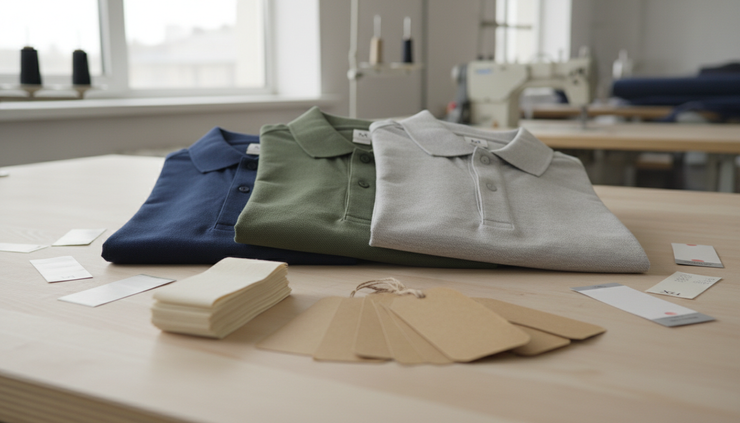
Private-label work needs tighter control over labels, packaging, sizing, and consistency. Ask the manufacturer if they can manage these requirements in-house or through approved vendors.
Check manufacturer reliability
When you compare clothing manufacturers, look beyond the price sheet. The supplier’s process affects the final outcome.
Check these points:
Manufacturing experience Experience with similar product types and order sizes.
Production capabilities Fabric sourcing, cutting, stitching, printing, embroidery, finishing, and packing.
Quality-control process Checks during fabric receipt, cutting, stitching, printing, final finishing, and packing.
Communication Clear responses, written confirmations, and practical timelines.
Previous B2B work Experience with schools, colleges, corporates, retailers, hospitality teams, NGOs, gyms, or events.
Ability to handle repeat orders Consistency in fabric, shade, fit, and finishing across multiple batches.
ZOOKS, based in Agra, India, works with bulk apparel requirements where specification clarity, sampling, production planning, and repeatability are central to the buying decision.
Create a quote comparison sheet
A simple comparison sheet helps remove confusion. Use the same format for every wholesale apparel manufacturer or bulk clothing supplier you are evaluating.
Factor | Manufacturer A | Manufacturer B | Manufacturer C |
Product | |||
Fabric | |||
GSM | |||
Quantity | |||
Size range | |||
Customisation | |||
Printing | |||
Embroidery | |||
Packaging | |||
GST | |||
Shipping | |||
Sample approval | |||
Lead time | |||
Final landed cost |
This makes wholesale clothing quotes easier to compare because every supplier is judged against the same buying criteria.
Why the cheapest quote may not be the cheapest order
Here is a realistic hypothetical example for 500 printed T-shirts delivered within India.
Cost factor | Manufacturer A | Manufacturer B | Manufacturer C |
Base T-shirt price | ₹250 | ₹280 | ₹300 |
Fabric and GSM | 160 GSM blend | 180 GSM cotton-rich | 200 GSM cotton |
Printing | Extra ₹35 | Included | Included |
Packaging | Extra ₹8 | Included | Included |
GST | Extra | Extra | Included in quote |
Shipping | ₹3,000 | ₹2,000 | Included |
Sampling | ₹1,000 | ₹750 | Included |
Estimated final landed cost per piece | About ₹309 plus GST impact | About ₹284 plus GST impact | ₹300 |
At first, Manufacturer A looks cheapest at ₹250. After adding printing, packaging, sampling, shipping, and taxes, the real cost changes. Manufacturer C looks higher at the start, but may offer better fabric, included decoration, cleaner packaging, and fewer surprise charges.
The right decision still depends on sample quality, delivery date, and order requirements. The key lesson is simple: compare the full apparel manufacturing cost, not only the base garment rate.
Questions to ask before finalising a bulk apparel manufacturer
Ask these questions before placing the order:
What exact fabric composition and GSM are included in the quote?
Is the quoted price inclusive of printing, embroidery, packaging, GST, and shipping?
What is the MOQ for this product and what are the quantity-wise price breaks?
Can you provide a pre-production sample before bulk production?
What measurement tolerance will you follow for each size?
What printing or embroidery method do you recommend for this design and fabric?
What is the expected lead time after sample approval?
How do you check quality during production and before dispatch?
Can you handle repeat orders with the same fabric, colour, and fit?
10. Are labelling, tagging, and private-label packaging available?
Final checklist before accepting a quote
Use this checklist before approving any bulk apparel order:
Product type is clearly mentioned
Fabric composition is confirmed
GSM is specified
Size chart is approved
Quantity and size breakup are final
Printing or embroidery details are clear
Print size, colours, and placements are confirmed
Packaging is included or priced separately
GST treatment is clear
Shipping cost and delivery location are confirmed
Sampling cost is agreed
Lead time is realistic
Final landed cost is calculated
Sample is checked and approved
Manufacturer reliability is verified

Make the decision on complete value
The best manufacturer is not always the one with the lowest per-piece quote. It is the one that gives the right product specification, clear pricing, approved quality, reliable delivery, and the capacity to support future requirements.
Before accepting any quote, compare the fabric, GSM, construction, printing, embroidery, packaging, GST, shipping, sampling, and lead time. Once the complete specification and final landed cost are visible, the right choice becomes much easier.
Get a Free Quote from Zooks
🌐 zooks.in | 📞 +91 79063 40279 | 📩 zooksteam@gmail.com
WhatsApp us today and get a quote within 24 hour
— The Zooks Team
WhatsApp us today and get a quote within 24 hours


