What Should Be Included in an Apparel RFQ Checklist for Accurate Quotes

A vague apparel quotation request usually leads to vague pricing. One manufacturer may quote for 180 GSM cotton, another may assume 220 GSM. One may include embroidery, packing, GST, and freight. Another may leave them out. The result is a set of prices that look comparable but are not.
A clear Request for Quotation helps buyers avoid that problem. It gives manufacturers the same information, in the same format, so every quote can be reviewed fairly on cost, quality, timeline, and service.
For procurement teams, HR and admin teams, retailers, corporate buyers, and clothing brands, a good RFQ is not just paperwork. It is the starting point for better costing, fewer revisions, cleaner approvals, and smoother production.

What an apparel RFQ is and why it matters
An apparel RFQ is a structured request sent to manufacturers or suppliers asking for a quotation for a specific garment order. It should explain what needs to be made, how it should be made, how many pieces are required, when they are needed, and what commercial terms should be quoted.
A strong RFQ helps manufacturers calculate:
Fabric consumption
Printing or embroidery cost
Cutting and stitching effort
Labelling and packing cost
Sampling charges
Inspection and finishing effort
Freight, taxes, and delivery costs
Production lead time
For the buyer, the main benefit is comparability. If each supplier receives the same apparel RFQ, the final quotations are easier to compare line by line.
A weak RFQ often creates hidden cost changes later. For example, a quote for a polo T-shirt may change after the buyer confirms pique fabric, 240 GSM, two-colour embroidery, custom neck label, individual polybag packing, and delivery to multiple cities. These are not small details. They directly affect cost and lead time.
Include complete product details and specifications
The RFQ should start with a clear description of the garment. Do not assume the manufacturer will know what “standard uniform shirt” or “premium hoodie” means.
Include the basic product details:
Garment type T-shirt, polo, hoodie, shirt, trouser, jacket, apron, cap, or other item
Fit Regular fit, slim fit, relaxed fit, unisex fit, men’s fit, women’s fit, or kids’ fit
Sleeve and neck style Round neck, V-neck, collar, full sleeve, half sleeve, raglan sleeve, cuff style
Construction details Pocket, placket, rib, zipper, drawcord, lining, side slit, hem style, button type
Reference sample Existing garment, photograph, tech pack, or measurement sheet
Intended use Corporate uniform, retail merchandise, event apparel, school uniform, industrial workwear, promotional clothing, or staff clothing
This context matters. A retail hoodie may need a different fabric hand feel and finish than a corporate giveaway hoodie. A warehouse uniform may need stronger stitching than a one-day event T-shirt.
If available, add a simple specification sheet with:
Front and back garment sketches
Measurement points
Size-wise measurements
Tolerance limits
Stitching notes
Trim details
Branding placement
Even a basic spec sheet reduces guesswork.
Define fabric type, GSM, colour, and sizes
Fabric is one of the largest cost drivers in apparel manufacturing. An RFQ should never mention only “cotton”, “polyester”, or “good quality fabric”.
Specify the fabric clearly:
Fabric composition For example, 100% cotton, cotton-poly blend, polyester, viscose blend, fleece, denim, twill, poplin, pique, interlock, jersey
GSM Mention the required GSM or acceptable range. For example, 180 GSM single jersey or 240 GSM pique
Fabric finish Bio-wash, silicon wash, anti-pilling, brushed fleece, mercerised finish, enzyme wash, or any other required treatment
Colour Provide Pantone shade, TCX reference, lab dip reference, or an approved physical swatch where possible
Colour fastness needs Especially important for uniforms, activewear, dark colours, and frequent-wash garments
Size range For example, XS to 3XL, 28 to 42 waist, or custom size chart
For corporate and institutional orders, size ratio is just as important as total quantity. A 1,000-piece order with equal quantities in all sizes is not the same as a 1,000-piece order with most pieces in L, XL, and 2XL.
A simple format works well:
Size | Quantity |
S | 100 |
M | 250 |
L | 300 |
XL | 250 |
2XL | 100 |
If the size split is not final, mention whether the quote should be based on an estimated ratio and whether final sizing will be shared after employee measurement or store allocation.

State quantity, branding, packaging, and sample needs
Quantity, size ratio, and MOQ
The RFQ should mention the required order quantity for each style, colour, and size. If there are multiple delivery phases, split the quantity by phase.
Include:
Total order quantity
Quantity by style
Quantity by colour
Quantity by size
Expected repeat order volume, if known
Required manufacturer MOQ
Flexibility on overproduction or underproduction
MOQ, or Minimum Order Quantity, can affect pricing. A manufacturer may quote differently for 100 pieces, 500 pieces, 2,000 pieces, or 10,000 pieces because fabric sourcing, dyeing, cutting, and setup costs change with volume.
If the order is still being planned, ask for slab-wise pricing. For example:
Quantity slab | Required quote |
250 pieces | Price per piece |
500 pieces | Price per piece |
1,000 pieces | Price per piece |
2,500 pieces | Price per piece |
This helps compare suppliers even before the final quantity is approved.
Printing, embroidery, labels, and brand elements
Decoration and trims can change the quotation significantly. The RFQ should explain every artwork and label requirement in detail.
Mention the decoration method:
Screen printing
Digital printing
Heat transfer
Sublimation
Embroidery
Applique
Patchwork
Woven badge
Reflective print or tape
Add artwork details:
Artwork file format available
Number of colours
Print or embroidery size in cm
Placement on garment
Thread count or stitch estimate, if known
Special effects such as puff print, metallic print, high-density print, or reflective material
For labels and trims, mention:
Main neck label
Size label
Wash care label
Brand tag
Hang tag
Barcode or SKU sticker
Buttons, zippers, drawcords, elastic, snaps, or Velcro
If artwork is not final, ask the manufacturer to quote with a clear assumption. For example, “Quote embroidery based on one left-chest logo up to 8 cm width, up to five thread colours.”
Packaging and finishing requirements
Packaging is often missed in RFQs, then added later as an extra cost. Include the expected packing method from the start.
Common details include:
Folding style
Individual polybag packing
Recycled or paper packaging preference
Size sticker
Barcode sticker
Carton quantity
Carton marking
Assortment packing by size, colour, store, department, or employee
Hanger packing, if needed
Ironing, thread trimming, stain checking, and final finishing
For corporate uniform rollouts, packing by employee name, department, branch, or city can save time at distribution. It also affects labour and packing cost, so include it in the RFQ.
Sample and approval requirements
Before bulk production, define the sample process.
Include:
Number of samples required
Sample size and colour
Whether the sample is chargeable
Expected sample lead time
Fit sample requirement
Print or embroidery sample requirement
Pre-production sample requirement
Approval method, such as physical approval or written approval over email
Who will approve the sample
A practical approval flow may include:
Fabric or colour approval
Fit sample approval
Print or embroidery approval
Pre-production sample approval
Bulk production go-ahead
This prevents disputes about whether production started before final approval.
Define quality, timeline, delivery, and commercial terms
Quality standards and inspection
Quality expectations should be written clearly. General phrases like “best quality” or “export quality” are not enough.
Mention the required checks:
Fabric GSM and composition
Shrinkage after wash
Colour fastness
Measurement tolerance
Stitching strength
Print or embroidery durability
Shade consistency
Needle damage
Loose threads
Stains, holes, and defects
Packing accuracy
Add inspection requirements if applicable:
Inline inspection
Final inspection
Buyer inspection
Third-party inspection
AQL level, if your organisation follows one
If your company has a quality manual or approved sample standard, attach it to the RFQ.
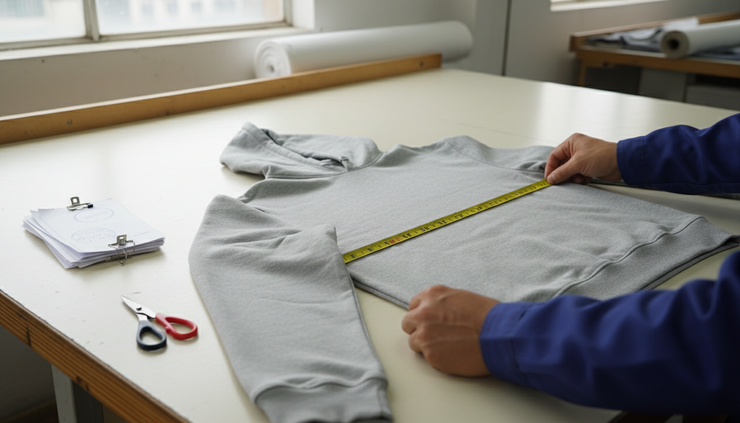
Production timeline and delivery requirements
The RFQ should state when the garments are needed and where they must be delivered.
Include:
RFQ submission deadline
Sample delivery deadline
Bulk production start date
Bulk dispatch date
Final delivery date
Delivery address or delivery cities
Partial shipment requirement
Penalty or rejection terms, if applicable
For event merchandise, employee onboarding kits, school uniforms, festive campaigns, and retail launches, timelines are critical. If the date cannot move, say so clearly.
Also ask the manufacturer to confirm the production lead time after:
Sample approval
Fabric approval
Artwork approval
Purchase order release
Advance payment receipt
This removes confusion about when the lead time actually begins.
Pricing, payment terms, taxes, and shipping
To compare quotations properly, ask suppliers to break down the price.
The quote should state:
Unit price per garment
Sampling charges
Printing or embroidery charges
Label and trim charges
Packing charges
Freight charges
GST and other applicable taxes
Any tooling, screen, or setup cost
Validity of the quotation
Ask the manufacturer to mention the pricing basis:
Ex-factory
Delivered to buyer location
FOB, CIF, or DDP for export-related orders
Freight paid or freight extra
Payment terms should also be clear. For example, advance percentage, balance before dispatch, credit terms if approved, and accepted payment methods.
If tax credit, e-invoicing, or GST compliance matters to your organisation, include that requirement in the RFQ.
Attach the right documents and avoid common mistakes
A buyer should provide enough information for the manufacturer to quote without repeated follow-ups. Attach whatever is available.
Useful documents include:
Tech pack or product specification sheet
Size chart
Measurement tolerance chart
Artwork files
Logo file in vector format
Pantone or colour reference
Label and packaging artwork
Reference sample photos
Quality manual
Packing instructions
Delivery address list
Vendor onboarding forms
Compliance requirements, if any
If some details are not final, state the assumptions to be used for quotation. That is better than leaving the supplier to guess.
Common RFQ mistakes include:
Asking only for the lowest per-piece price
Not mentioning GSM or fabric composition
Sharing photos without measurements
Missing size ratio
Ignoring packaging and labelling
Not defining logo size and placement
Asking for urgent delivery without sample approval time
Comparing quotes with different tax or freight terms
Not asking whether MOQ applies
Changing specifications after receiving the quote
A good quotation is only possible when the RFQ is complete. If the requirement changes later, the price may also need to change.
Ask the right questions before comparing quotations
Once quotations come in, do not compare only the final price. Ask manufacturers for clarifications before selecting one.
Useful questions include:
What fabric composition and GSM have you quoted?
Is the quoted price inclusive of printing, embroidery, labels, packing, GST, and freight?
What is your MOQ for this style, colour, and fabric?
What is the lead time for sample and bulk production?
When does the production timeline begin?
Are there any assumptions in the quotation?
Can you share a pre-production sample before bulk production?
What quality checks are included?
What happens if pieces fail inspection?
Can you handle repeat orders with the same specifications?
What documents will be shared with dispatch?
Are there extra charges for urgent delivery, special packing, or multiple delivery locations?
The answers help separate a complete quotation from a low but incomplete one.
ZOOKS works with businesses looking for bulk and custom apparel manufacturing, including uniforms, T-shirts, hoodies, promotional apparel, and branded merchandise. For a clear, comparable quote, share your garment specifications, quantity, logo details, delivery location, and timeline with the ZOOKS team and request a detailed enquiry review.

Use this simple apparel RFQ checklist
Before sending your RFQ, check that it includes the following.
RFQ item | What to include |
Product description | Garment type, fit, style details, intended use |
Fabric | Composition, GSM, weave or knit type, finish |
Colour | Pantone, swatch, lab dip, or approved reference |
Size details | Size range, size chart, tolerance, size ratio |
Quantity | Total quantity, style-wise split, colour-wise split |
MOQ | Required MOQ confirmation and slab-wise pricing |
Branding | Print, embroidery, label, trim, artwork, placement |
Packaging | Folding, polybag, stickers, cartons, assortment method |
Samples | Fit sample, artwork sample, pre-production sample |
Quality | Inspection method, tolerances, defect rules, test needs |
Timeline | RFQ deadline, sample date, production date, delivery date |
Delivery | Address, locations, partial shipments, freight terms |
Pricing | Unit price, taxes, freight, setup cost, quote validity |
Payment | Advance, balance, credit period, payment mode |
Documents | Tech pack, artwork, size chart, packing guides, compliance files |
A well-written RFQ saves time for both sides. It helps the manufacturer quote accurately and helps the buyer compare fairly. Before selecting the lowest price, make sure every quotation is based on the same garment, same fabric, same branding, same packing, same delivery terms, and same quality expectations. That is the practical way to avoid surprises after the purchase order is issued.


