Ideal MOQ for New Clothing Brands in India with ZOOKS Low MOQ Guide

A new clothing brand can fail before the first drop sells out if it orders the wrong quantity. Order too little and the per-piece cost may eat into margins. Order too much and cash gets stuck in unsold inventory.
MOQ, or minimum order quantity, is one of the first numbers a founder must understand before speaking to a manufacturer. The ideal MOQ for new clothing brand in India is not a fixed number. It depends on the garment, fabric, design, printing method, labels, packaging, budget, and how confident the brand is about demand.
For most startups, the goal is not to get the lowest MOQ at any cost. The real goal is to order enough to test the market properly, while keeping inventory risk under control.
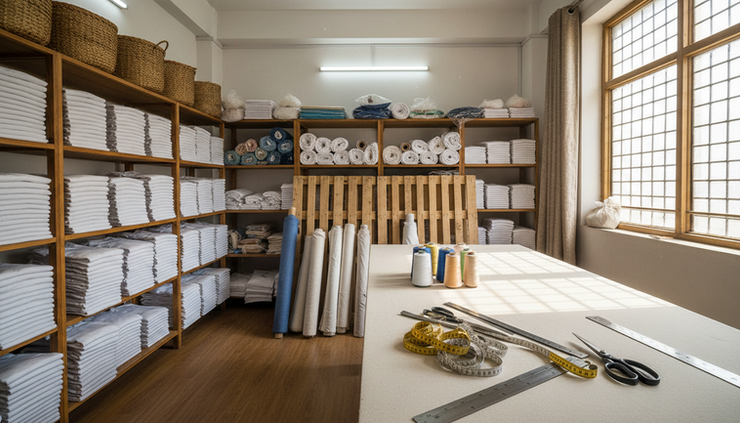
What MOQ means in clothing manufacturing
MOQ is the smallest quantity a manufacturer is willing to produce in one order. In apparel, MOQ can apply at different levels:
Per style
For example, one hoodie design may need a minimum of 50 or 100 pieces.
Per colour
A black T-shirt and a white T-shirt are usually counted as separate colourways.
Per size
Some suppliers may need a minimum size ratio, such as S to XXL in a planned spread.
Per fabric or GSM
Custom fabric, special dyeing, or a non-standard GSM may need a higher quantity.
Per decoration method
Screen printing, embroidery, woven labels, and special packaging can each affect MOQ.
A simple example makes this clear.
If a manufacturer says the MOQ is 100 pieces per style and you want one oversized T-shirt in two colours, the total order may become 200 pieces. If you add two prints for each colour, the order may become more complex and may attract extra setup costs.
Why MOQ matters for new brands
MOQ affects almost every business decision in the first collection. It shapes cash flow, pricing, warehousing, launch plans, and profit margins.
For new brands, MOQ matters because it controls three major risks.
Cash risk
Money spent on inventory cannot be used for photoshoots, sampling, ads, packaging, or the next collection. A high MOQ may look cheaper per piece, but it can block working capital.
Demand risk
A hoodie design that looks strong during planning may not sell as expected. Low MOQ lets a brand test fits, colours, graphics, and price points before committing to larger production.
Supplier risk
The first order also tests the manufacturer. Quality, timelines, finishing, measurements, packing, and communication all become clear only after actual production.
A low MOQ order is often a practical first step. It gives the brand enough units to launch, take feedback, and build confidence before scaling.
What factors influence the right MOQ
The right MOQ comes from product planning, not guesswork. A founder should look at the full production picture before asking a supplier for the lowest possible number.
Budget and landed cost
Start with the total budget, not only the garment price.
Include:
Sampling
Fabric sourcing
Printing or embroidery
Labels and tags
Packaging
GST and logistics
Photoshoot pieces
Returns and exchanges buffer
If the budget is ₹1,00,000, spending ₹90,000 on stock leaves very little room for selling the stock well. In many cases, a smaller first run with better presentation is safer than a large order with weak launch support.
Product type and construction
Basic T-shirts are easier to manufacture in smaller quantities than structured jackets or heavily customised streetwear pieces.
Simple products usually support lower MOQ because the manufacturer can source fabric and trims more easily. Complex products need more planning, skilled labour, and production time.
Fabric choice and availability
MOQ rises when the fabric is hard to source or needs custom development.
Lower MOQ is easier when using:
Readily available cotton jersey
Common fleece fabrics
Standard pique for polos
Existing colours from supplier stock
Regular GSM options
MOQ may increase when using:
Custom dyed fabric
Special blends
Unusual GSM
Yarn-dyed stripes
All-over prints
Performance fabrics with special finishes
Customisation level
The more custom the product, the higher the setup work. A blank T-shirt with a front print is easier than a cut-and-sew garment with custom panels, contrast stitching, woven patches, and special packaging.
This does not mean new brands should avoid customisation. It means they should choose where customisation matters most.
Supplier capabilities
Not all manufacturers are built for low MOQ. Some factories are designed for bulk export orders. Others, like ZOOKS, work with startups, small businesses, and custom apparel orders where lower quantities and flexible production are part of the service model.
When choosing a manufacturer, check whether low MOQ is a genuine capability or only a sales promise.

Low MOQ and high MOQ both have trade-offs
Neither low MOQ nor high MOQ is automatically better. The right choice depends on the stage of the brand.
Low MOQ | High MOQ |
Lower inventory risk | Lower per-piece cost |
Easier to test designs | Better margins if the stock sells |
Less cash blocked in stock | More consistent production planning |
Useful for first drops and trials | Useful for proven products |
Higher cost per piece | Higher risk of dead stock |
Fewer options for custom fabric | More room for custom development |
For a new brand, low MOQ is usually better for the first few drops. Once a design proves demand, the brand can move to higher quantities to improve margins.
A practical approach is:
Start with a small launch order
Track sales by size, colour, and design
Reorder winners
Remove slow-moving options
Increase MOQ only when demand is proven
How MOQ affects per-piece pricing
Per-piece pricing usually drops as MOQ increases. This happens because many production costs are fixed or semi-fixed.
A manufacturer may need to spend time on:
Pattern setup
Cutting planning
Machine setup
Printing screens or embroidery digitising
Quality checks
Packing process
Production coordination
These costs spread across the total order. If the order is 30 pieces, each piece carries a larger share of setup cost. If the order is 300 pieces, the setup cost spreads out.
For example, screen printing becomes more cost-efficient in larger runs because screens and setup are required before printing begins. By contrast, DTG or DTF printing may suit smaller runs better, depending on the design and fabric.
The key is to compare total cost and selling price, not only the manufacturer’s quote.
Ask:
Can the product sell profitably at this per-piece cost?
Is the selling price realistic for the target customer?
What happens if only 60% of the stock sells in the first month?
Is there enough margin for discounts, returns, and damages?
A cheaper unit price is not useful if the brand cannot sell the extra stock.
Typical MOQ by apparel category in India
MOQ can vary widely by manufacturer, fabric, design, and decoration method. The table below gives practical planning ranges for new brands. Treat these as starting points for supplier discussions, not fixed industry rules.
Apparel type | Typical low MOQ planning range | What affects the MOQ most |
T-shirts | 30 to 100 pieces per design | Fabric stock, GSM, print method, colour count |
Oversized T-shirts | 30 to 100 pieces per design | Pattern, fit approval, fabric width, size ratios |
Hoodies | 50 to 150 pieces per design | Fleece availability, trims, embroidery, GSM |
Sweatshirts | 50 to 150 pieces per design | Fabric type, rib quality, print placement |
Polo shirts | 50 to 150 pieces per design | Pique fabric, collar, placket, embroidery |
Joggers | 50 to 150 pieces per design | Fit, waistband, drawcord, pocket construction |
Co-ord sets | 50 to 100 sets per design | Two-piece production, size matching, fabric use |
Jackets | Often higher than basics | Lining, zips, panels, trims, construction time |
A T-shirt brand can usually start with lower quantities than a brand launching jackets or technical outerwear. A startup planning five products may also reduce risk by launching two strong styles first instead of spreading the budget across too many SKUs.

How customisation changes MOQ
Customisation is where many new brands underestimate cost and quantity. A small design change can require a different process, vendor, or setup.
Printing
Printing MOQ depends on the method.
Screen printing often works better for larger quantities, especially when the artwork has fewer colours. Each colour may need a separate screen, so setup effort rises with design complexity.
DTF, DTG, or digital printing can suit smaller runs, especially for detailed graphics or multiple designs. The per-piece cost may be higher, but the lower setup requirement can help startups test ideas.
Embroidery
Embroidery usually needs digitising before production. Large embroidery, dense stitches, sleeve placements, and 3D embroidery can raise cost and time.
For low MOQ orders, simple logo embroidery on polos, sweatshirts, or caps is usually easier than large back embroidery.
Labels and tags
Custom neck labels, woven labels, wash care labels, hang tags, and barcode stickers add brand value, but each item may have its own MOQ from the label vendor.
New brands can start simple:
Printed neck labels instead of woven neck labels
Standard wash care labels with brand tags
One common label design across multiple products
Hang tags ordered in a quantity that can serve future drops
Packaging
Custom boxes, printed polybags, butter paper, stickers, and thank-you cards can improve customer experience. They can also increase minimums.
For a first drop, avoid packaging that forces a large order. Use clean, simple packaging that looks professional without creating dead stock.
Custom garment design
A fully custom pattern, unique panels, custom dyeing, or special trims will usually increase MOQ. If the brand is new, it may be smarter to customise fit, print, label, and finishing first, then move into advanced garment development after sales data improves.
How new brands can negotiate a lower MOQ
A manufacturer is more likely to support low MOQ when the order is simple, clear, and easy to produce.
Try these practical steps.
Use available fabrics
Ask what fabrics, colours, and GSM options are already in stock or easy to source.
Limit colourways
Start with one or two colours instead of launching every colour idea at once.
Reduce size complexity
Use a planned size ratio based on expected demand. Avoid too many fringe sizes in the first run unless the market needs them.
Keep decoration simple
One strong print or embroidery placement is easier than multiple placements across the garment.
Combine styles smartly
If two T-shirt designs use the same fabric and fit, the manufacturer may be able to plan production more efficiently.
Accept a slightly higher per-piece price
Lower MOQ often costs more per unit. Paying a little more can still be better than holding unsold stock.
Offer repeat order potential
Share a realistic plan for reorders if the first batch sells. Manufacturers value buyers who plan clearly.
Be production-ready
Provide tech packs, artwork files, size charts, label details, and packaging instructions before asking for the final quote.
ZOOKS can be a practical fit for brands that need low MOQ and custom apparel manufacturing in India, especially when the brand wants guidance on product choice, printing, embroidery, labels, and order planning.

How to avoid overstocking in the first collection
Overstocking usually happens when a brand orders based on excitement instead of demand signals.
Use a simple buying plan before production.
Start with fewer SKUs
A SKU means one style, colour, and size combination. One T-shirt design in five sizes and three colours becomes 15 SKUs. More SKUs make inventory harder to manage.
Use size ratios carefully
If the target market usually buys more M and L, do not split sizes equally by default. Ask the manufacturer for a practical size ratio, then adjust after the first sales cycle.
Test demand before bulk production
Use samples, pre-orders, waitlists, pop-ups, or limited drops to judge interest. Do not treat likes or comments as confirmed demand.
Plan reorders before launch
Ask the manufacturer how fast a repeat order can be produced if a style sells well. A slightly smaller first order is easier when reorder timelines are clear.
Track every sale
After launch, track which sizes, colours, and designs move fastest. The second order should be based on sales data, not personal preference.
Questions to ask a manufacturer before placing an order
Before paying an advance, ask direct questions. Clear answers reduce surprises later.
What is the MOQ per style, colour, size, and fabric?
Can available fabric be used to reduce MOQ?
What is the price difference between 50, 100, 200, and 500 pieces?
Are sampling charges separate or adjustable against bulk orders?
What printing and embroidery methods are available for low MOQ?
What are the tolerances for measurements and colour variation?
Can labels, tags, and packaging be included in the same order?
What is the expected production timeline after sample approval?
How is quality checked before dispatch?
What happens if pieces are defective or short-shipped?
Can repeat orders be made with the same fabric and fit?
Are GST, packing, and freight included in the quote?
Good manufacturers answer these questions clearly. If the answers keep changing, pause before committing.
How to choose a low MOQ clothing manufacturer in India
A low MOQ manufacturer should offer more than a small number on a quotation. Look for a partner who understands startup constraints and can still maintain quality.
Check for:
Experience with T-shirts, hoodies, sweatshirts, polos, and related apparel
Support for printing, embroidery, labels, and packaging
Clear sampling process
Transparent pricing at different quantity levels
Practical advice on fabric and fit
Realistic delivery timelines
Quality checks before dispatch
Willingness to support repeat orders
Communication that is specific and written down
ZOOKS works with brands looking for low MOQ and custom apparel manufacturing in India. For startups and small businesses, that can mean a smoother path from sample to first drop, without being forced into quantities that do not match early demand.

The practical way to decide your ideal MOQ
The ideal MOQ for a new clothing brand is the quantity that lets the brand launch properly, test demand, protect cash, and reorder with confidence.
For a first order, avoid chasing the lowest possible unit cost. Focus on the best balance between risk and margin. Start with products that are easier to produce, use available fabrics, keep colours limited, and place customisation where it adds clear value.
If the first drop is still in planning, prepare your product list, expected quantities, fabric preferences, artwork, labels, and target selling price. Then send an enquiry to ZOOKS for low MOQ custom apparel manufacturing and ask for quantity-wise pricing before placing the order.


