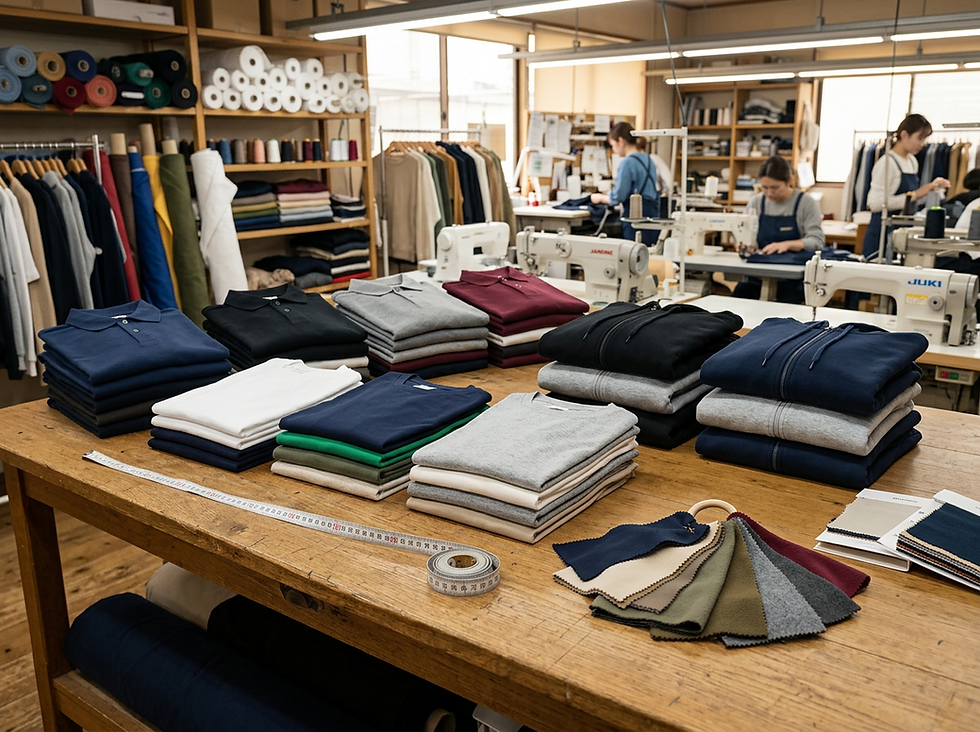
T Shirt vs Polo vs Sweet Box for Diwali Gifts Which Will Your Team Use Longer

Diwali gifting is a small moment with a large responsibility. The gift should feel thoughtful, fit the budget, reach people on time, and suit a mixed workforce across roles, locations, and preferences.
Sweet boxes have a long and respected place in Diwali gifting. They are festive, familiar, and easy to share with family. At the same time, many HR and procurement teams are now asking a practical question: after the celebration is over, what remains useful?
That is where branded apparel enters the discussion. A well-made T-shirt or polo shirt can be worn for months, sometimes longer, at work events, team activities, plant visits, onboarding sessions, travel days, or even casual Fridays. It serves a day-to-day purpose while quietly reinforcing company identity.

Why companies give Diwali gifts to employees
Diwali gifts are not only about the item. They are a way to recognise effort, mark the festive season, and make employees feel included.
For companies, Diwali gifting usually has a few goals:
Thank employees for their contribution during the year
Create a shared festive experience across teams
Build goodwill with people who may work in different locations
Reflect the company’s culture and attention to detail
Offer something that feels appropriate for a wide employee base
The challenge is that one gift has to work for many people. A startup with 80 employees, a factory with 600 staff, and a corporate office with distributed teams will all think differently about usability, logistics, budget, and presentation.
This is why the comparison of T-shirt vs polo vs sweet box for employees is useful. The best choice is not only the one that looks good on delivery day. It is the one that matches the team’s daily reality.
Sweet boxes and branded apparel serve different purposes
A sweet box works well as a festive gesture. It is easy to understand, culturally relevant, and brings an immediate sense of celebration. Many employees appreciate receiving something they can take home and share during Diwali.
Branded apparel works differently. It is not consumed in one sitting or one week. It becomes part of the employee’s usable wardrobe, provided the fabric, fit, sizing, and logo treatment are handled well.
Sweet box | Branded apparel |
Enjoyed during the festive period | Used over a longer period |
Simple to distribute | Needs size planning |
Strong festive association | Strong daily utility |
Usually the same for everyone | Can be customised by size, colour, and style |
Limited use after consumption | Continued use if quality is good |
A sweet box creates a short, warm moment. A T-shirt or polo creates repeated touchpoints. Both have value, but they are not designed to do the same job.
For a company that wants the gift to remain useful beyond Diwali week, apparel often makes more sense.
Short-term consumption and long-term usability change the value of a gift
The real difference is not price alone. It is usage.
A sweet box is appreciated, enjoyed, and finished. That is part of its purpose. The value is in the festive experience.
A branded T-shirt or polo has a different value curve. An employee may wear it:
During internal celebrations
On team outings
At offsite events
During volunteer days
At exhibitions or stalls
For casual workdays where dress codes allow
While travelling for work
At company sports or cultural events
Each use extends the life of the gift. It also builds a sense of belonging without forcing a formal uniform.
This matters for HR and business owners because an employee gift should not feel like a giveaway that is forgotten. A comfortable, well-fitted garment has practical value. When the apparel looks good and feels good, people are more likely to keep wearing it.

T-shirts and polos as practical Diwali employee gifts
T-shirts and polos are popular because they are familiar, easy to wear, and suitable across many industries. They also offer flexibility in design.
A T-shirt usually feels more relaxed. It works well for startups, creative teams, tech teams, event staff, warehouse teams, field campaigns, and employee engagement activities.
A polo shirt feels slightly more structured. It is suitable for teams that need a cleaner, semi-formal look without moving into formal wear. It can work well for sales teams, retail staff, service teams, supervisors, customer-facing staff, and management groups.
When a T-shirt is the better choice
Choose a T-shirt when the goal is comfort, everyday casual use, or a younger, more relaxed brand feel.
A T-shirt may suit:
Startup teams and product teams
Internal Diwali celebrations
Team-building events
Delivery, support, and field activity days
Employee welcome kits
Large employee groups where budget control matters
T-shirts also allow more surface area for printing. This can help if the design includes a festive graphic, campaign line, or team theme. Keep the design wearable. If the artwork is too loud, employees may wear it once and keep it aside.
When a polo is the better choice
Choose a polo when the gift needs to feel more premium, structured, or work-appropriate.
A polo may suit:
Customer-facing teams
Retail and showroom staff
Operations supervisors
Sales and service teams
Plant visits and vendor visits
Senior employee gifts
Mixed teams where a smarter appearance is preferred
Polos often look better with embroidery, especially for a small chest logo. They can also align well with corporate colours while still feeling wearable.
How to choose between the two
Use the team’s actual usage as the deciding factor.
If the team will use it for | Consider |
Casual celebrations and team events | T-shirt |
Customer visits or semi-formal workdays | Polo |
Large distributed workforce | T-shirt or polo based on role |
Premium festive gifting | Polo |
Youthful internal culture | T-shirt |
Repeated work use | Polo with subtle branding |
If there are different employee groups, one style may not serve everyone equally. Some companies choose T-shirts for larger employee groups and polos for customer-facing or leadership teams. This can work well if the gift still feels consistent in quality and presentation.
Quality decides whether apparel becomes useful or ignored
A T-shirt or polo only delivers long-term value if people actually want to wear it. That depends on the basics.
Fabric and GSM should match the use case
GSM refers to the weight of the fabric. A very light garment may feel flimsy. A very heavy one may feel uncomfortable in warm Indian weather or during outdoor use.
For employee gifts, the fabric should feel balanced. It should be soft, breathable, and suitable for repeated washing. Cotton and cotton-blend fabrics are common choices, depending on the finish, durability, and budget required.
For T-shirts, focus on:
Soft hand feel
Good stitching
Neckline that does not lose shape quickly
Fabric that is not too transparent
Comfortable sleeve and body fit
For polos, focus on:
Collar structure
Placket quality
Sleeve rib comfort
Piqué or smooth knit fabric quality
Shape retention after washing
A slightly better fabric often improves perceived value more than a complex design.
Fit and sizing need early planning
Sizing is one of the biggest reasons apparel gifting goes wrong. A great polo in the wrong size is still not useful.
For bulk Diwali apparel orders, collect sizes early. Use a simple size form with clear options. If possible, share a size chart with chest measurements, length, and fit guidance.
For mixed teams, include a practical size range. Do not assume that a standard size split will fit every workforce. A warehouse team, a tech team, and a retail team may have different size patterns.
Good sizing planning includes:
Men’s and women’s fit options where needed
Extended sizes if the workforce requires them
A buffer quantity for exchanges
Clear labelling by employee, department, or location
Separate packing by branch or team
Individual sizing adds work, but it increases the chance that employees will use the gift.

Logo placement, colours, and decoration methods need restraint
Corporate apparel should look like something employees can wear comfortably, not only on one official day. That means logo placement and decoration should be planned carefully.
Logo placement should support wearability
Common options include:
Left chest logo
Sleeve logo
Small back neck branding
Subtle festive mark
Tone-on-tone logo
Minimal front print
For most polos, a small embroidered logo on the chest looks clean. For T-shirts, printing gives more flexibility, but the artwork should still be wearable.
Avoid putting too many elements on the garment. A large logo on the front, a slogan on the back, and multiple sleeve marks can make the apparel feel promotional rather than useful.
Embroidery and printing both have a place
Embroidery works well for polos because it feels durable and premium. It is best for simple logos and smaller placements.
Printing works well for T-shirts and more detailed designs. It can support colour, festive artwork, or a campaign theme.
The right method depends on:
Fabric type
Logo complexity
Number of colours
Quantity
Budget
Desired finish
Delivery timeline
If the logo has fine lines or gradients, ask for a sample or artwork review before production. What looks good on screen may not work equally well on fabric.
Corporate colours should be wearable
Using corporate colours can strengthen company identity, but the shade must suit apparel. A colour that looks good on a website or signboard may not be the best garment colour.
For Diwali gifting, companies often choose rich but wearable colours such as navy, maroon, white, charcoal, bottle green, or warm neutrals. The right choice depends on the brand palette and how employees will use the garment after the festival.
Subtlety helps. If people feel comfortable wearing it outside a company event, the gift lasts longer.
Bulk ordering needs a clear plan
A Diwali apparel order involves more than choosing a garment. HR and procurement teams need to manage artwork, sizes, approvals, packaging, production, dispatch, and delivery timelines.
Budget and MOQ should be discussed early
Every apparel manufacturer will have practical minimum order quantities, production timelines, and price differences based on fabric, GSM, decoration method, and packing style.
Before asking for a quote, decide:
Approximate quantity
T-shirt or polo requirement
Fabric preference
Logo method
Number of colours
Size range
Packaging type
Delivery locations
Target delivery date
This helps avoid vague quotations and last-minute changes.
Packaging and presentation affect the first impression
Packaging does not need to be excessive. It should be neat, protective, and easy to distribute.
Practical packaging options include:
Individual poly packing
Size stickers
Employee name labels
Department-wise bundling
Location-wise cartons
Festive sleeve or simple gift note, if needed
A good garment handed over in poor packaging can lose impact. A neatly packed garment feels more intentional and is easier for HR teams to distribute.
Delivery planning matters during the festive season
Diwali timelines can get tight quickly. Apparel production needs time for fabric sourcing, cutting, stitching, decoration, finishing, packing, and dispatch.
Plan backwards from the gifting date. Build time for:
Design approval
Size collection
Sample approval
Production
Quality check
Packing
Transport
Internal distribution
Last-minute orders often lead to compromises on colour, size availability, or decoration method. Early planning protects quality.

When apparel makes more sense for different teams
Branded apparel is especially useful when the team has repeated occasions to wear it. It becomes more than a festive token.
Consider apparel for:
Startups
A T-shirt can help create a shared team identity during growth phases, offsites, launches, and internal events.
Sales and field teams
A polo can give a consistent, approachable look during visits and trade interactions without feeling too formal.
Retail and service teams
Polos can be practical for floor staff, supervisors, and customer-facing roles where neat appearance matters.
Manufacturing and operations teams
T-shirts or polos can be useful for team events, training days, and company celebrations, provided the fabric is comfortable for the environment.
Remote or distributed teams
An apparel gift can create a shared connection across locations. Size collection and courier packing need extra care.
Large corporates
Different garment options by role can work well, as long as quality and presentation remain consistent.
Common mistakes when ordering employee apparel gifts
Many apparel gifting issues are avoidable. The most common mistakes come from rushing decisions or treating the garment like a generic giveaway.
Avoid these errors:
Choosing the lowest-cost fabric without checking feel and durability
Finalising colour only from a screen image
Using oversized branding that people may not wear often
Collecting sizes too late
Ordering too few spare pieces
Ignoring women’s fit requirements where relevant
Choosing heavy fabric for warm-weather use
Approving artwork without checking print or embroidery feasibility
Leaving packaging and sorting until the last stage
Placing orders too close to the gifting date
The strongest apparel gifts are simple, comfortable, and well-finished. They do not need to be complicated.
A simple checklist for planning a bulk Diwali apparel order
Use this checklist before placing an order.
Define the purpose of the gift Decide whether the apparel is for festive gifting, team identity, work use, or events.
Choose the garment type Select T-shirts, polos, or a role-wise mix.
Confirm the quantity Include employees, new joiners, spare pieces, and exchange stock.
Collect sizes early Share a size chart and set a clear deadline.
Select fabric and GSM Match comfort, climate, usage, and budget.
Finalise garment colour Check whether the shade works with the logo and is wearable.
Choose logo placement Keep it subtle and practical.
Select decoration method Use embroidery or printing based on garment type and artwork.
Approve a sample Review fit, fabric, colour, and decoration before full production.
Plan packaging Decide on individual packing, size labels, and location-wise sorting.
Lock delivery timelines Allow time for production, quality checks, and dispatch before Diwali.
Work with the right manufacturer Choose a supplier who understands corporate apparel, not just generic merchandise.
ZOOKS works as a customised corporate apparel manufacturer for companies looking at bulk T-shirts and polo shirts for Diwali gifting, employee programmes, and branded team wear. For bulk Diwali apparel enquiries, share your quantity, garment type, size range, logo details, and delivery timeline with ZOOKS to get a practical recommendation and production plan.
The gift that lasts is the one people use
A sweet box brings a familiar festive moment, and that has its place. A T-shirt or polo serves a different purpose. It continues to be useful after Diwali, especially when the fabric is comfortable, the fit is right, and the branding is subtle.
For HR teams, procurement managers, startups, and corporate companies, the decision comes down to intent. If the goal is a festive gesture for immediate enjoyment, a sweet box fits that role. If the goal is a Diwali gift that employees can keep using, branded apparel deserves serious consideration.
The best employee apparel gift is not the loudest or most expensive one. It is the one your team reaches for again.